
Search North Carolina Voter Registration
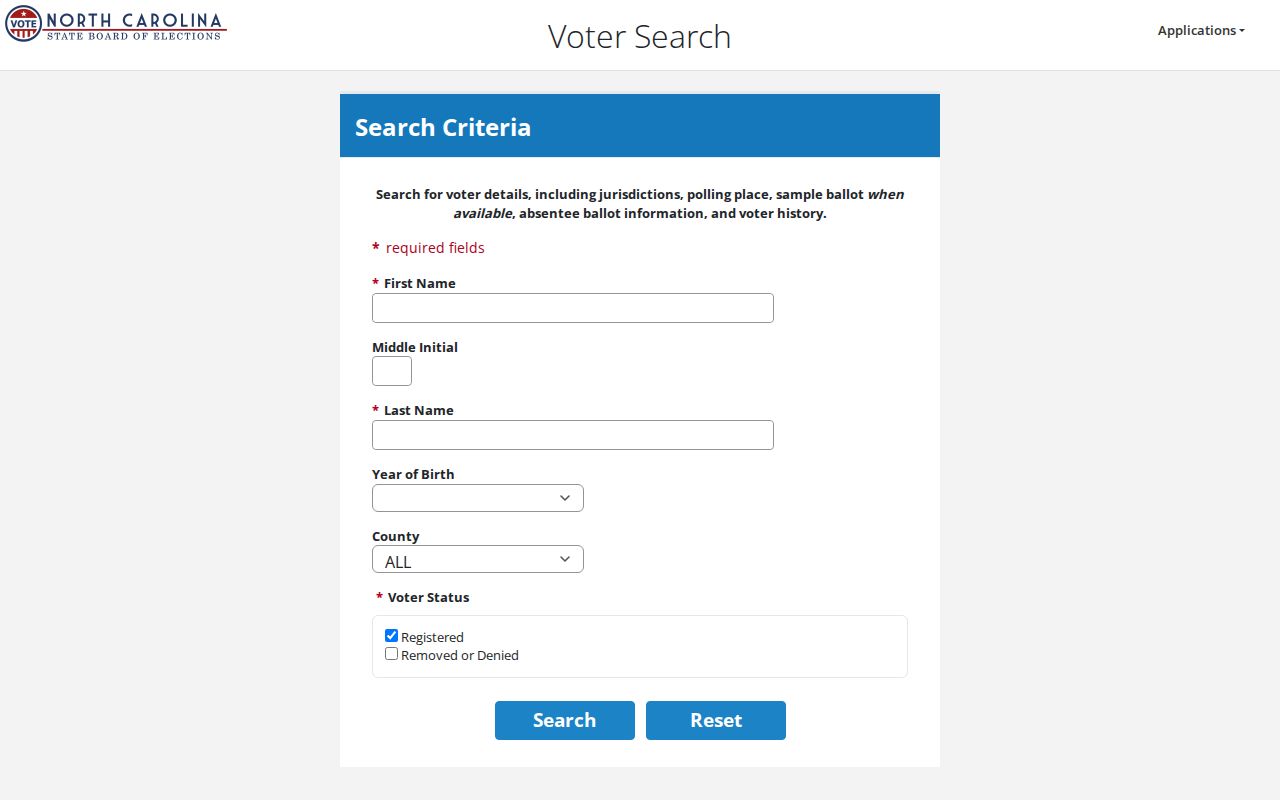
The NCSBE Voter Search is the first stop for an individual record. No account or payment is needed. Enter a last name, then add a first name, birth year, county, or status to reduce a long result list. A broad search helps when a former surname, spelling variant, or recent county move may affect the match. Open the matching result to review registration, jurisdiction, polling-place, sample-ballot, absentee-status, and participation panels.
The official state voter lookup uses a small set of controls. County is optional, which matters when the correct county is not yet known. Status choices can include Active, Inactive, Removed, and Denied, though the portal may revise its menu. Search again without a county if the first query misses.
| Lookup control | Input | Required | How to use it |
|---|---|---|---|
| First Name | Text | No | Try the given name, an initial, or a spelling variant |
| Last Name | Text | Yes | The portal's main surname key |
| Year of Birth | Selector | No | Uses a year, not the full date of birth |
| County | Dropdown | No | Choose any of North Carolina's 100 counties |
| Voter Status | Dropdown | No | Narrows by the current administrative status |
| Search / Clear | Buttons | Not applicable | Run the query or reset all controls |
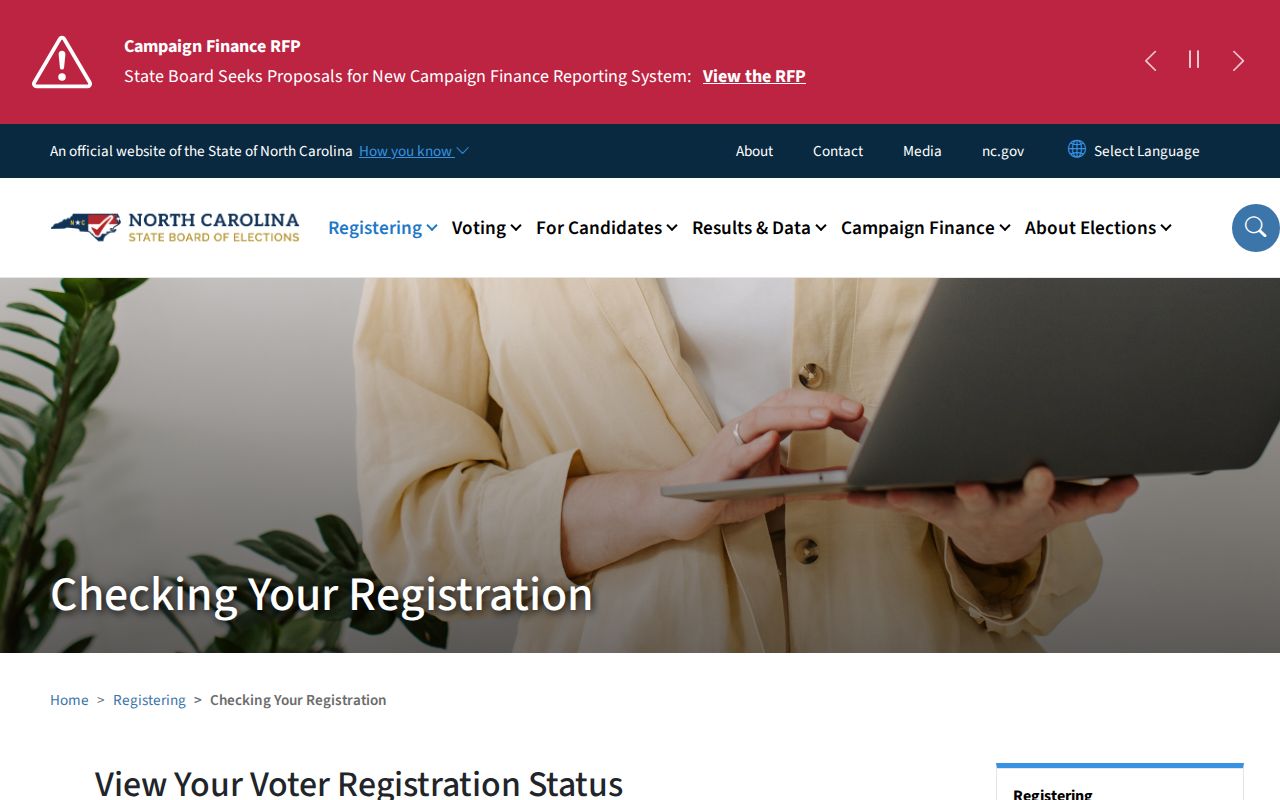
The NCSBE registration guide explains how to check and read a registration. Its captured screen shows the official route that North Carolina voters use before opening the more detailed result panels.
A portal miss is not the last word. The county board that maintains the record can check spelling, status, address changes, and corrections.
North Carolina Voter Record Fields
A matched result begins with name, county, and status. Detail panels then separate identity, voting geography, election logistics, absentee information, and participation history. The record can connect a voter to a precinct and districts, but those assignments may change after redistricting. Party means registration affiliation. It does not reveal a vote.
| Identity | Name and a public age or age category where provided; full birth date remains confidential |
|---|---|
| Registration | State voter number, county, registration date, status, and status reason in file products |
| Address | Residential and available mailing address, except where a protection rule suppresses residence |
| Affiliation | Democratic, Republican, Libertarian, Green, or Unaffiliated as applicable |
| Geography | Precinct, municipality, congressional, legislative, judicial, and applicable local districts |
| Election details | Election Day polling place, sample ballot when available, and current election links |
| Participation | Election, county, precinct, and voting method, never candidate selections |
The official capture comes from the live North Carolina lookup form. Its small set of inputs makes county and birth year useful tools for sorting common-name matches.
Keep the county and registration status with any saved result. Those facts help distinguish people who share a name.
North Carolina Voter History Limits
North Carolina's voter history documents participation. It may identify the election, date, county, precinct, and voting method because an entry is created when the voter presents to vote. It cannot show a candidate, contest choice, or marked ballot. The NCSBE voter history data page provides separate statewide and county downloads for this limited record.
Participation is not preference. A voter-history row proves that the person participated in an election, never how that person voted.
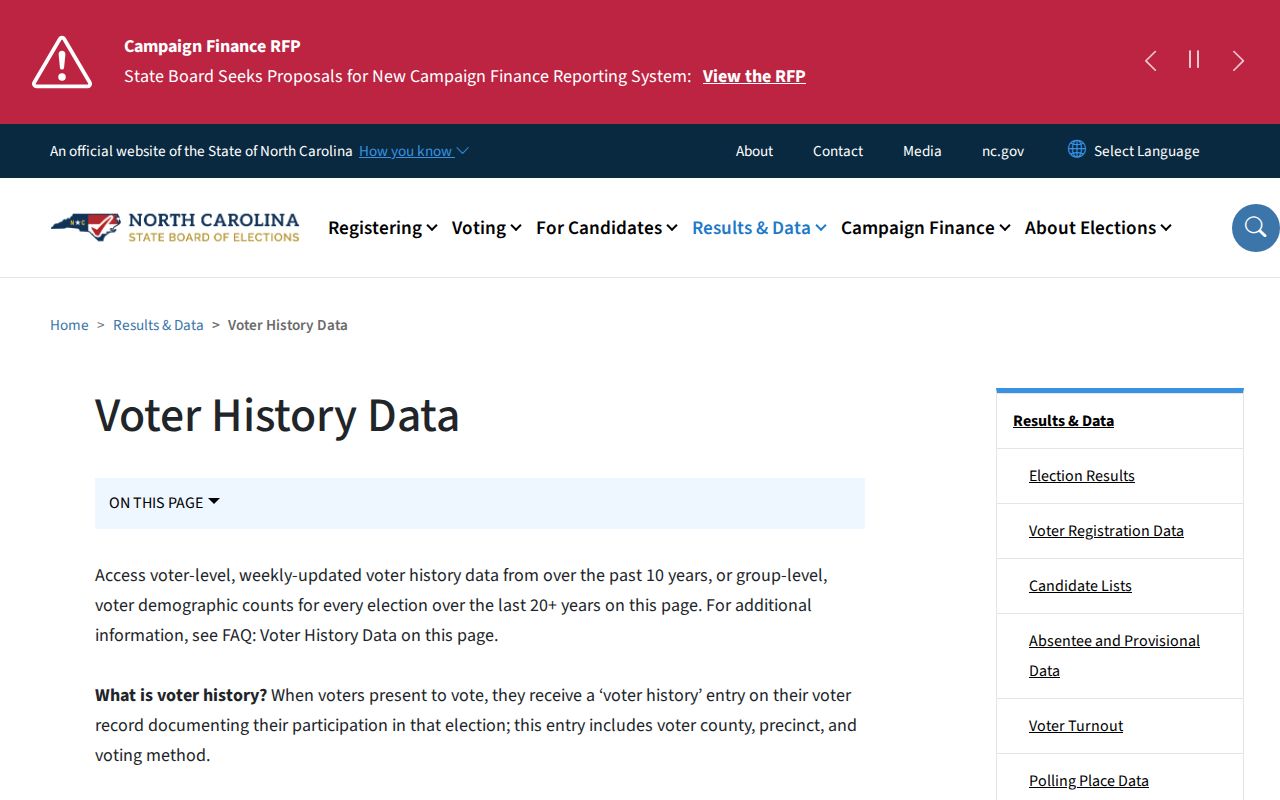
The official history-download screen reinforces the split between participation data and ballot secrecy. It is useful for checking whether two same-name entries follow the same county trail, but it does not support claims about political views.
Absentee request and return status is also distinct from ballot content. The absentee-request register remains confidential until voting opens on Election Day under G.S. 163-228.
Privacy in North Carolina Voter Rolls
G.S. 163-82.10 draws the line between public list data and confidential registration material. Public lists may be selected by party, gender, race, registration date, precinct, districts, and history. Full or partial Social Security numbers, full date of birth, registration-agency identity, submitted email, voter-ID photographs and copies, and driver-license numbers are closed. Signatures may be viewed in limited circumstances but generally may not be copied or traced.
Protected voter data stays hidden. Full birth dates, official identifiers, and qualifying protected residences are not public under G.S. 163-82.10.
A qualifying protective order or Address Confidentiality Program card can shield a residence while leaving the person's name, precinct, and other public data visible. The North Carolina Address Confidentiality Program lets qualified survivors use a substitute address. A blank or substitute residence should not be treated as evidence that the record is false.
Download North Carolina Voter Files
NCSBE publishes current statewide and county voter registration files as compressed downloads rather than requiring a purchaser-only paper order. The registration data page links ZIP or text files and the data-layout documentation needed to interpret each column. Public access is free online. No buyer class or purchase fee is stated for those public downloads.
| Decision | Available choice | Result |
|---|---|---|
| Data family | Current registration, voter history, or statistics | Selects the kind of election record |
| Geography | Statewide or one county | Limits file size and local scope |
| Snapshot | Current weekly file, dated statistics, or election history | Sets the time represented |
| Format | Compressed flat file with layout/readme | Defines columns and codes |
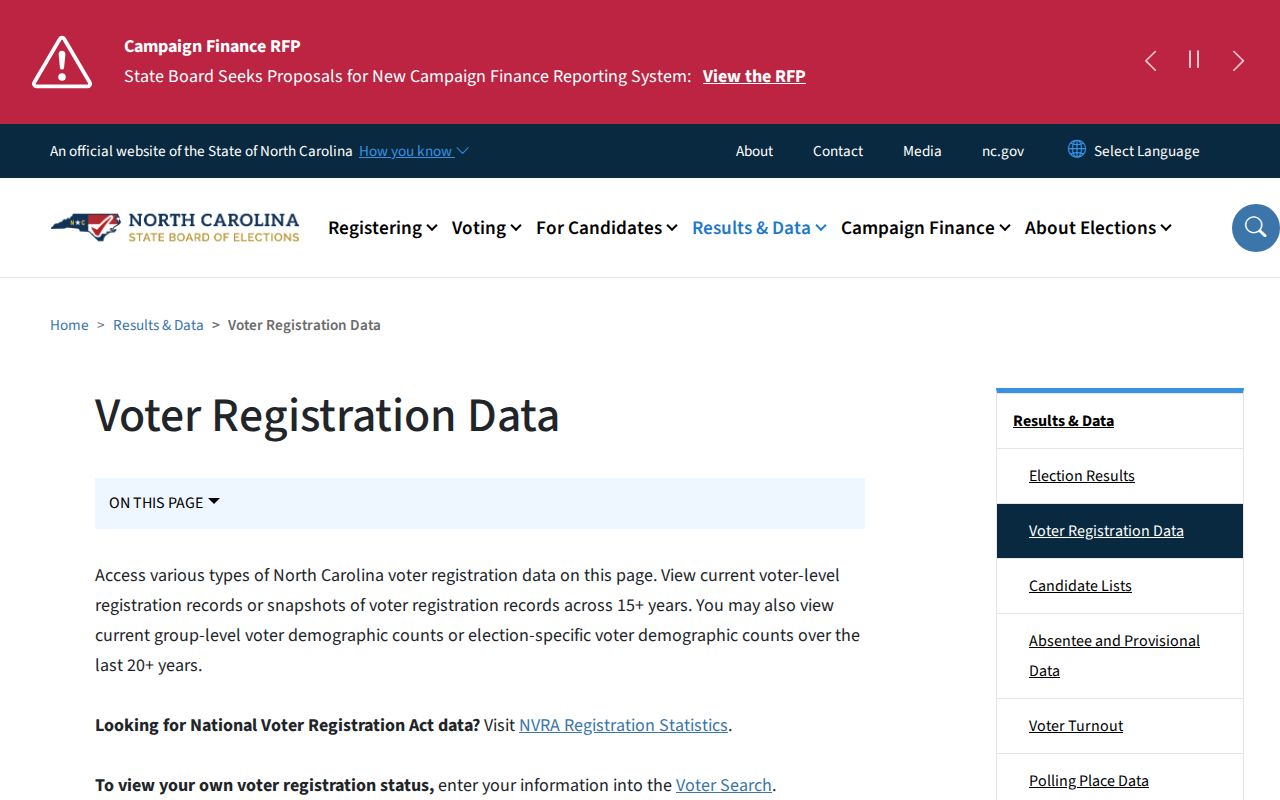
The official voter-file capture shows where file links and layout resources sit together. Read the layout before comparing status reasons, district codes, or other abbreviated fields.
For a tailored county or precinct list, state the desired geography, fields, format, and delivery method. The county board can provide an existing list under the statute.
North Carolina County Election Offices
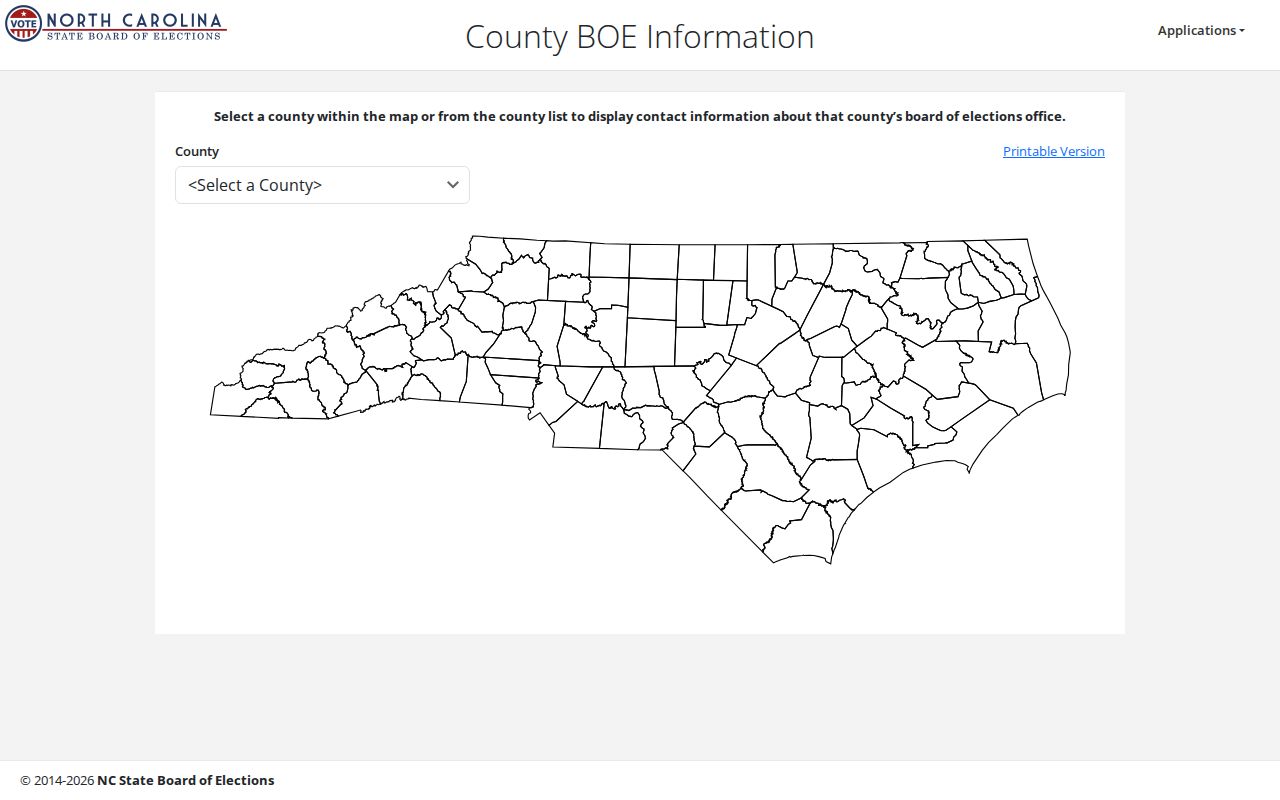
Each of North Carolina's 100 county boards maintains local registration data. Use the county board finder for the board's address, phone, website, and leadership contacts. Contact the county board for a correction, application inspection allowed by law, a tailored public list, or a record that the statewide tool does not resolve. Email or phone is the practical first step, followed by a focused request for an existing file if needed.
The county-board finder capture shows why the county remains essential even with a statewide portal. Select the county that owns the record, then use its listed contact channel rather than sending the question to an unrelated local office.
NCSBE headquarters can handle statewide program questions at 430 N. Salisbury Street in Raleigh, by phone at 919-814-0700 or 866-522-4723. General access-law context belongs with the North Carolina public records process, while voter-file questions stay with NCSBE or the correct county board.
Note: Include the county, record type, date range, desired fields, and delivery format when requesting an existing voter list.
North Carolina Registration Status Changes
G.S. 163-82.14 governs list maintenance tied to death, felony status, duplicates, moves, and address confirmation. Federal safeguards bar removal solely because a person did not vote. An inactive or removed label is an administrative status, not proof of misconduct. Check the status reason and speak with the county board before drawing a conclusion.
Weekly statistics can be filtered by county and date at the NCSBE registration statistics tool. Tables may group registrations by party, race, ethnicity, and gender. These totals describe registration, not turnout. They help place a county file in time, especially when a current count differs from an older download.
A move can also change precinct and district assignments while the person remains registered. Compare the registration date, current county, status reason, and available address fields as one set. If those facts conflict with a saved copy, the county board's current record controls. Do not merge two same-name entries merely because their party or age category matches.
Lawful Use of North Carolina Voter Data
The statewide computerized file contains only the portions made public under G.S. 163-82.13. Read the current download terms before reusing a file, preserve protected fields as protected, and do not attempt to reconstruct withheld identifiers or residences. Public access does not authorize threats, stalking, harassment, identity fraud, or deceptive contact.
North Carolina law also treats improper access to government computers and identity misuse as separate offenses. Keep a lawful civic, family-history, or record-verification purpose. When a fact matters, verify it with NCSBE or the county board rather than relying on a copied file that may be out of date.
Historic North Carolina Voter Registers
Historical poll books and registration registers have no single statewide name portal. Search the State Archives catalog for a county Board of Elections record group, registration book, poll book, or election return. Surviving dates vary by county, and older series may be available only as an archival description, in a search room, or through a specific copy request.
Old poll books can establish that a person appeared in a precinct election, though clerk-rendered spelling may differ from modern records. Search initials, surname variants, and the county that existed on the election date. The Government and Heritage Library and local-history rooms are sound fallbacks for missing county runs. County creation and transfer of records can place an older voter under a parent county without the person ever moving.
Begin an archive inquiry with the county, an approximate election date, the person's name variants, and a known precinct when possible. Ask whether the series survives as an original volume, microfilm, or transferred county record. A catalog description does not guarantee that every page has been scanned. When the poll book is not online, a precise citation makes a search-room visit or copy request far more useful.