
North Carolina People Directory Coverage
No single directory lists everyone in North Carolina. The most reliable choice depends on the person's tie to an agency, school, parcel, licensed field, business, city, or past community. Current people directories publish a narrow set of official facts. Historical books and archive catalogs reach farther back but often require browsing by place and year.
| Directory | Who it identifies | Keeper | Access route |
|---|---|---|---|
| State agency directory | Agencies and public state contacts | State of North Carolina | Free agency browse and directory search |
| Legislator roster | House and Senate members by district | NC General Assembly | Free roster, district, and address lookup |
| Municipal department pages | Published department leaders and contacts | Each city or town | Local website; completeness varies |
| Campus directories | Published faculty, staff, students, and units | UNC-Chapel Hill and NC State | Free name search; privacy choices apply |
| Property and deed indexes | Assessed owners and instrument parties | County tax office and Register of Deeds | County-specific free portals or office terminals |
| License and business indexes | Licensees, entities, agents, and officials | State boards and Secretary of State | Free official name searches |
| City and reverse directories | Past residents, firms, spouses, occupations, addresses | Libraries, DigitalNC, special collections | Digital item, catalog request, or research room |
| Yearbooks and cemetery lists | Classmates, school groups, and decedents | DigitalNC, schools, libraries, cemeteries | Digital browse or local inquiry |
Start with the source tied to the known fact. An agency points to a government roster, a school points to a campus or district directory, an address points to a county tax roll, and an old city points to a year-specific printed volume.
North Carolina Government Directories
The North Carolina state employee directory supports published government-contact searches, though availability can vary. The agency directory, agency staff pages, and main office lines are practical fallbacks. The General Assembly member roster can be browsed by chamber, name, or district, while its address tool resolves representation.
A sample government directory entry can include:
- A full or preferred published name
- The agency, division, or legislative chamber
- A title, public role, district, or assigned counties
- An office phone, email, address, or contact link
- Committees, bills, biography, or other public legislative details
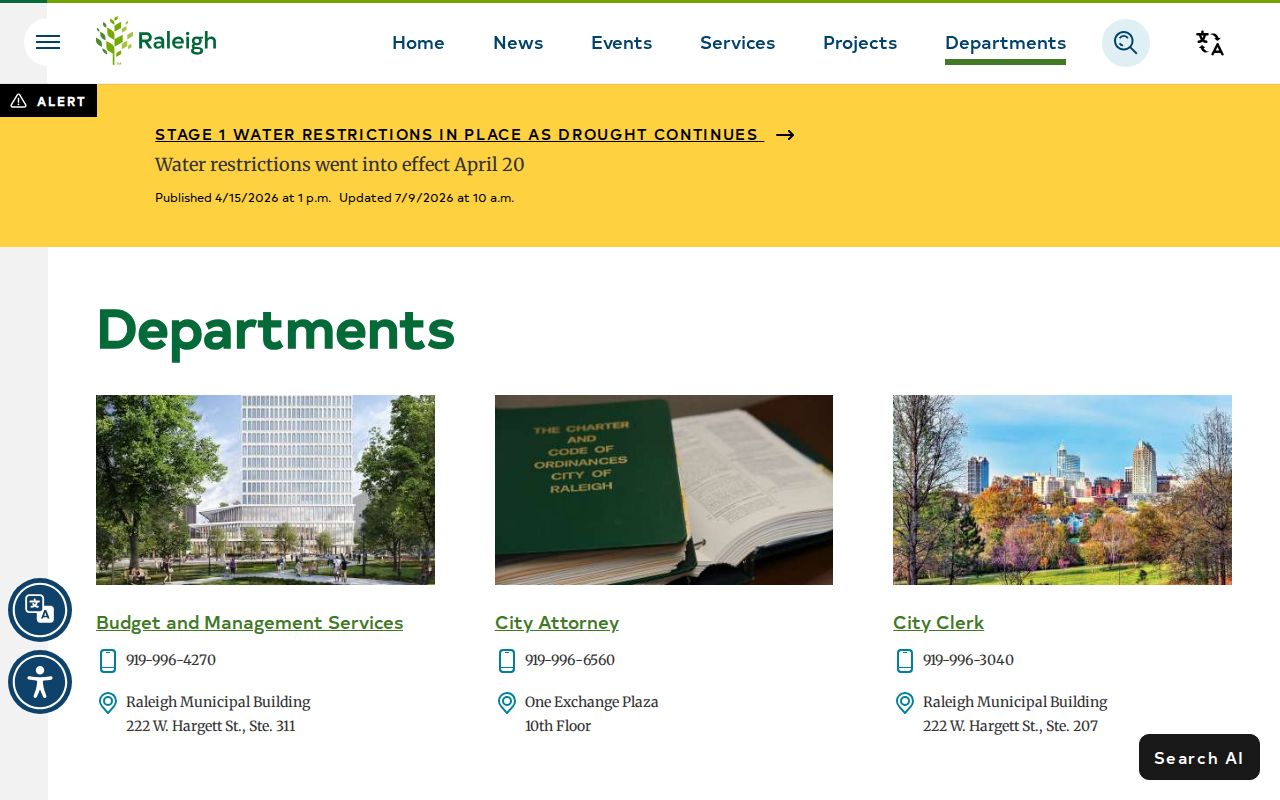
North Carolina has no universal municipal staff search. The Raleigh departments directory is a representative city route, listing offices, leadership, and published contacts rather than residents. Its captured page shows the honest local pattern: browse the department, then use that unit's contact details.
If a person is absent, call the department or municipal clerk. A narrow request for an existing public roster is the last fallback, not a demand that an agency create a new list.
North Carolina Campus Directory Searches
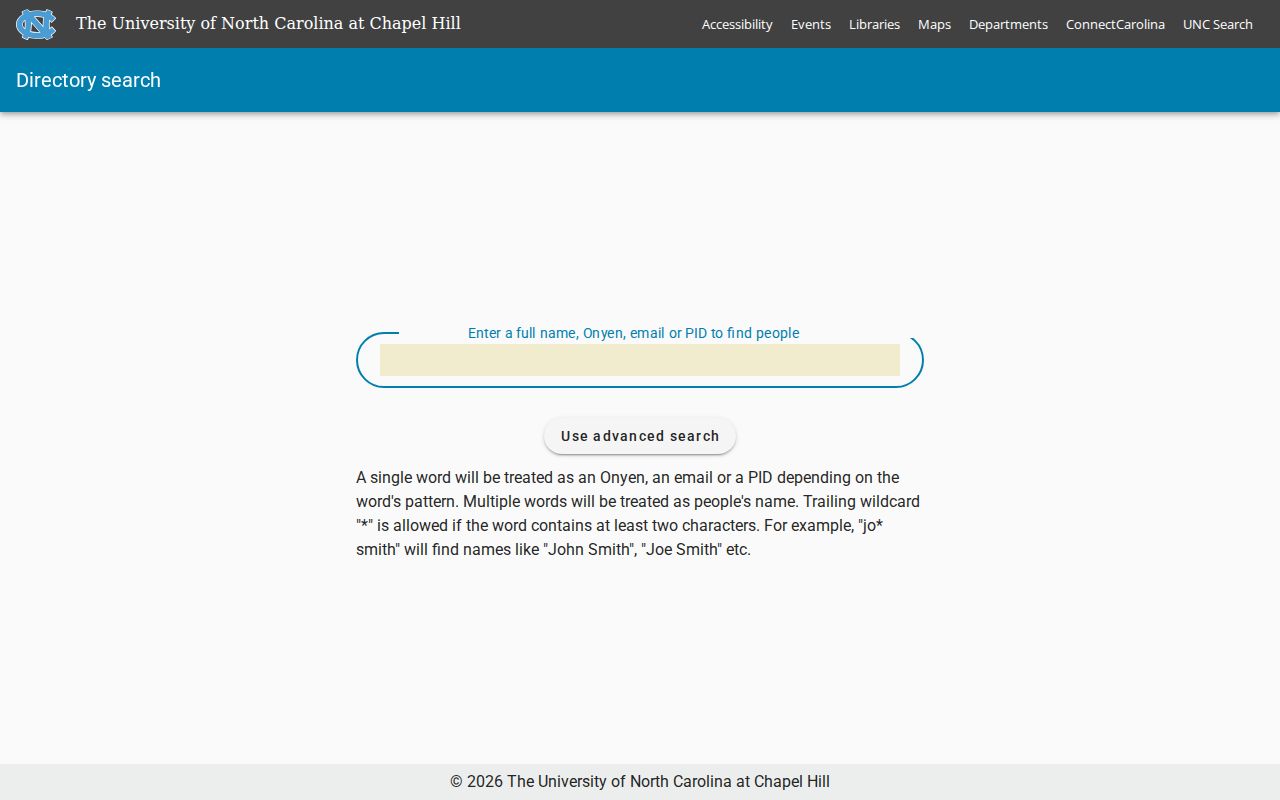
The UNC-Chapel Hill directory is a strong institutional example. Enter a person name, run the search, and distinguish person results from department contacts where the interface exposes both. The entry may show preferred name, role or affiliation, department, campus office or mailing address, phone, UNC email, and a profile link. Privacy choices affect who appears, so no result does not prove no connection.
| Search field | Control | Required | Result or limit |
|---|---|---|---|
| Name query | Text | Yes | Finds published person entries; partial matching depends on the interface |
| Person or department context | Result/browse | No | Separates people from organizational contacts where shown |
| Search | Button | Not applicable | Runs the query |
The official UNC directory capture shows the sparse name-first interface used for North Carolina campus directory searches.
A result should be matched by department, role, or campus contact before treating it as the same person.
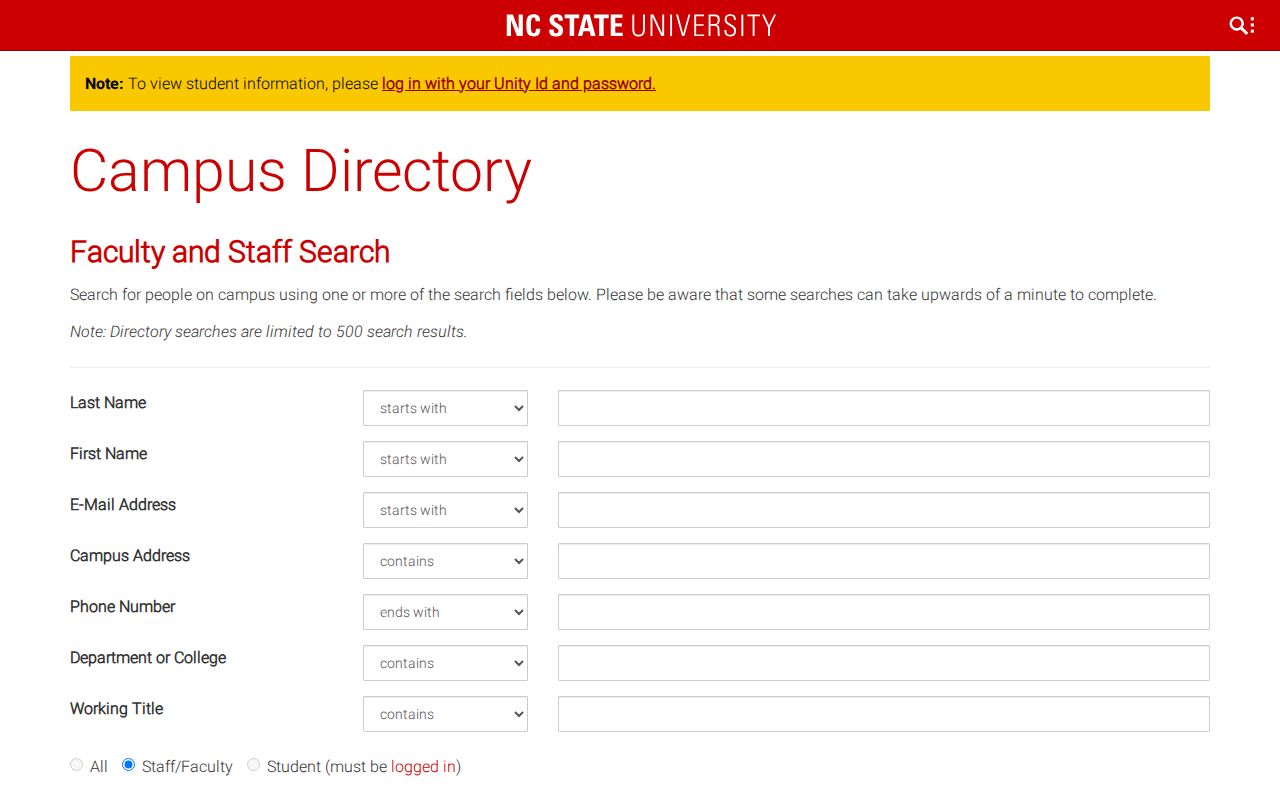
The NC State University directory also returns published affiliation and contact facts from a name query. Its captured screen provides a second current campus route in Raleigh.
For public schools, use the state education directory to identify a district or school, then open that local education agency's directory for staff names, titles, emails, and phone numbers.
North Carolina Owner Directories
County tax rolls and deed indexes work as name directories even though they were not built as household listings. A county assessor can connect an owner name to a parcel, assessed mailing address, property location, parcel identifier, values, and limited sales history. The county Register of Deeds then connects grantors and grantees to an instrument date, type, and book or page reference.
North Carolina has no single authoritative statewide owner-name search. NC OneMap parcels can orient a search, but the county tax roll controls. The representative Wake County Real Estate Search accepts owner names, while Wake Register of Deeds access guidance explains the county deed route. A clean sequence is surname to assessor, mailing and site address, GIS parcel, deed citation, then party chain.
Do not treat the owner mailing address as proof of residence. It may belong to an out-of-county recipient. For exact access rules or copies, use the North Carolina public records access page.
North Carolina License Directories
Official professional directories verify a board relationship and public status. The state's licensing board directory routes searches to the correct regulator. Useful examples include the Medical Board, Board of Nursing, State Bar, Real Estate Commission, Licensing Board for General Contractors, and Board of Cosmetic Art Examiners.
Most entries can show a name, license number and type, status, location or public business address, issue or expiration facts, and discipline links where posted. Those fields prove board status, not home residence. A same-name match needs a second anchor such as license number, city, specialty, or dated board action.
The State Bar member directory adds bar number, membership status, city, and public discipline links. Board search forms differ, so use the official regulator named on the state gateway instead of assuming one statewide license database covers every field.
North Carolina Business Name Directories
The Secretary of State Business Registration Search works as a directory of entities and the people named in public filings. Search by an organization or individual context, select matching behavior, and enter the organization name or last, first, and middle name fields. Results can show legal name, SOS ID, type, status, formation details, registered agent and office, addresses, officials, and filing images.
A registered agent is not necessarily an owner. Assumed business names are another layer. The state assumed-name search covers county-filed certificates made on or after December 1, 2017, and can search all counties when none is selected. Earlier or unindexed certificates may require the county Register of Deeds.
Chamber and trade rosters are self-reported and may be member-only. They can supply a current public contact, but they should not override an official entity or license record.
Historic North Carolina City Directories
North Carolina city directories are scattered across DigitalNC, the State Library, UNC's North Carolina Collection, and local-history rooms. Exact runs differ by city and publisher, so there is no sound statewide start year. A typical Hill or Polk entry may list a resident, spouse marker, occupation or business, and address. A reverse or criss-cross section turns the search around from street and house number to occupant.
| Collection route | Years represented | Best use | Access |
|---|---|---|---|
| DigitalNC city directories | City and item-year specific | Name, occupation, spouse, address, neighbors | Free digital browse; OCR varies |
| Local-history library runs | Verify exact years in each catalog | Printed city, reverse, and telephone volumes | Catalog request or onsite use |
| UNC North Carolina Collection | Title and holding specific | Directories, maps, newspapers, and ephemera | Catalog and special-collections access |
| State Archives county series | County and series specific | Election, tax, estate, land, and related rosters | Catalog, search room, or copy request |
The research does not support publishing an exact Raleigh directory year range. Ask the Olivia Raney Local History Library for the precise year or reverse volume instead. The same holding-level check applies statewide.
North Carolina Directory Eras
People directories in North Carolina span several record-making eras. Each period calls for a different search habit, and later digitization did not erase the need for books, microfilm, or series-level archive descriptions.
- Colonial and county-record era
- County land, tax, court, bond, estate, and marriage series can identify residents long before modern directories. General Assembly session records reach 1709.
- Printed city-directory era
- City books organize names, firms, spouses, occupations, and addresses; reverse sections later allow street-to-occupant research.
- Civil-registration era
- Statewide birth and death registration began in October 1913, giving directories another dated record to compare.
- Digital directory era
- Campus, agency, license, parcel, and business portals offer current access, while DigitalNC turns selected printed volumes and yearbooks into browsable images.
County formation is part of the timeline. A person may appear under a parent county in early records and under a later county without moving. Check the county that existed on the event date.
North Carolina Yearbook Directories
DigitalNC yearbooks can identify classmates through portraits, captions, classes, and activities. Browse by institution and county when name OCR fails on decorative type. Then compare the entry with alumni material, newspapers, or a current official contact. A name alone is too thin for identity proof.
Cemetery lists, obituary indexes, church registers, and community rosters extend these people directories. Municipal cemetery offices may publish burial plot and date facts. The Moravian Archives in Winston-Salem and Guilford College's Friends Historical Collection hold rich membership, marriage, burial, and migration evidence that can predate civil registration.
Private association, congregation, alumni, or neighborhood rosters are not presumed public. Use published boards, minutes, archive finding aids, or a direct institutional inquiry. For family history and reunions, the best trail moves from an old yearbook or city book to a current official directory while requiring at least two matching facts.
Geography of North Carolina Directories
A postal city, municipal boundary, county, school district, and court filing county are different layers. A Raleigh mailing address does not make the city custodian of a parcel, deed, estate, or state-court file. Those sources belong to Wake County offices. City pages are strongest for departments, boards, permits, and city-created contacts.
The same split appears throughout North Carolina. Choose the county for property and recorded documents, the municipality for city staff and boards, the institution for campus entries, and the state for licenses, entities, and elected officials. When the web tool fails, call the office, ask a library reference desk for an exact directory year, search the State Archives catalog, or use an onsite terminal.