
Find People Across North Carolina
North Carolina does not keep one master name index. Statewide systems can reveal a court county, voter county, business address, professional license, or correctional record. County offices then supply deeds, parcel cards, estate files, marriage records, and local historical material. Start wide when the county is unknown. Shift to the county as soon as one reliable result supplies that link.
A name alone can produce false matches, especially across North Carolina's 100 counties. Add a middle initial, former surname, rough age, relative, old street, or dated event. Keep the case number, parcel PIN, deed book and page, or other stable record key. Those identifiers make a North Carolina search easier to repeat and give an office enough detail to retrieve the right file.
- Search the statewide eCourts Portal by party or business name. Note the county, case number, role, and status of a plausible result.
- Open the tax-property system for that county. Compare the owner mailing address with the property's street address and record the parcel ID.
- Use the county Register of Deeds index to follow a known owner, deed citation, lien, or prior grantee.
- Check voter, business, license, or correctional tools only when that record type fits the person and purpose.
- Move to the clerk counter, register terminal, library, or State Archives when the online trail ends.
Note: Two matching facts are safer than one common name, and a dated record number is often the strongest point of comparison.
North Carolina People Records Offices
Custody follows the record, not the searcher's location. NC Vital Records keeps the statewide vital-statistics system. The State Archives preserves transferred state and county series. The Secretary of State maintains corporation and related business filings. At county level, the Register of Deeds records land instruments and usually handles local birth, death, and marriage copies; the Clerk of Superior Court keeps trial cases, estates, wills, special proceedings, and divorce judgments.
North Carolina tax offices maintain parcel ownership and mailing data, while county or municipal GIS offices publish map layers. A city office is the right source for its permits, boards, code cases, and correspondence, but a city mailing address does not move deeds or court files into city custody. Use the office that created or legally keeps the requested record.
NC Vital Records
1915 Health Services Way
Raleigh, NC
Statewide certificates and forms
County Registers
100 county offices
Deeds and local vital records
Coverage varies by county
The North Carolina Register of Deeds finder is the statewide route to the correct county office.
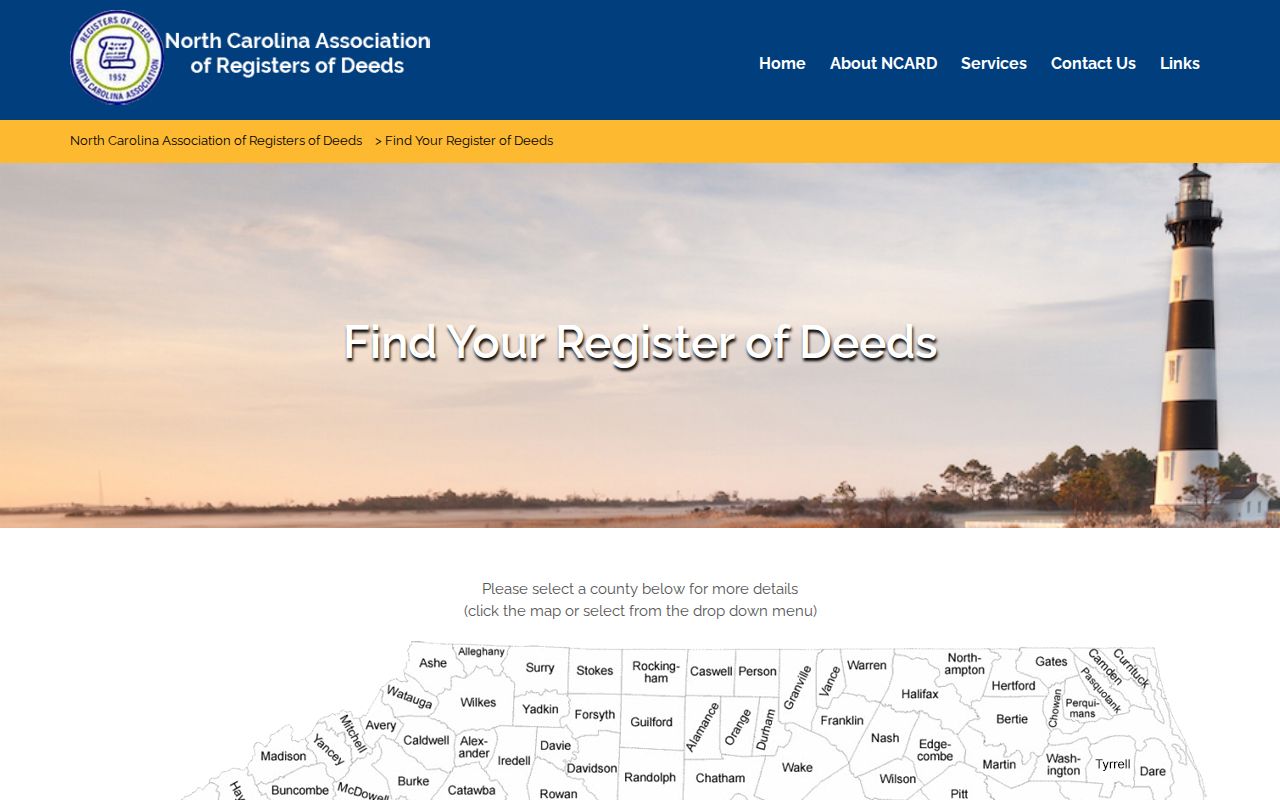
The finder matters because deed portals, local certificate services, contact methods, and historical coverage differ across North Carolina's 100 counties.
North Carolina eCourts Name Lookup
The North Carolina General Court of Justice completed eCourts conversion in all 100 counties on October 13, 2025. Portal Smart Search accepts a case number or a party or business name. A surname wildcard needs at least three characters before an asterisk; a first-name wildcard needs at least one. Results can identify a case, parties and roles, filing location, events, dispositions, hearings, and public judgment details.
The live North Carolina eCourts Portal shows the statewide entry point used for a court-based people lookup.
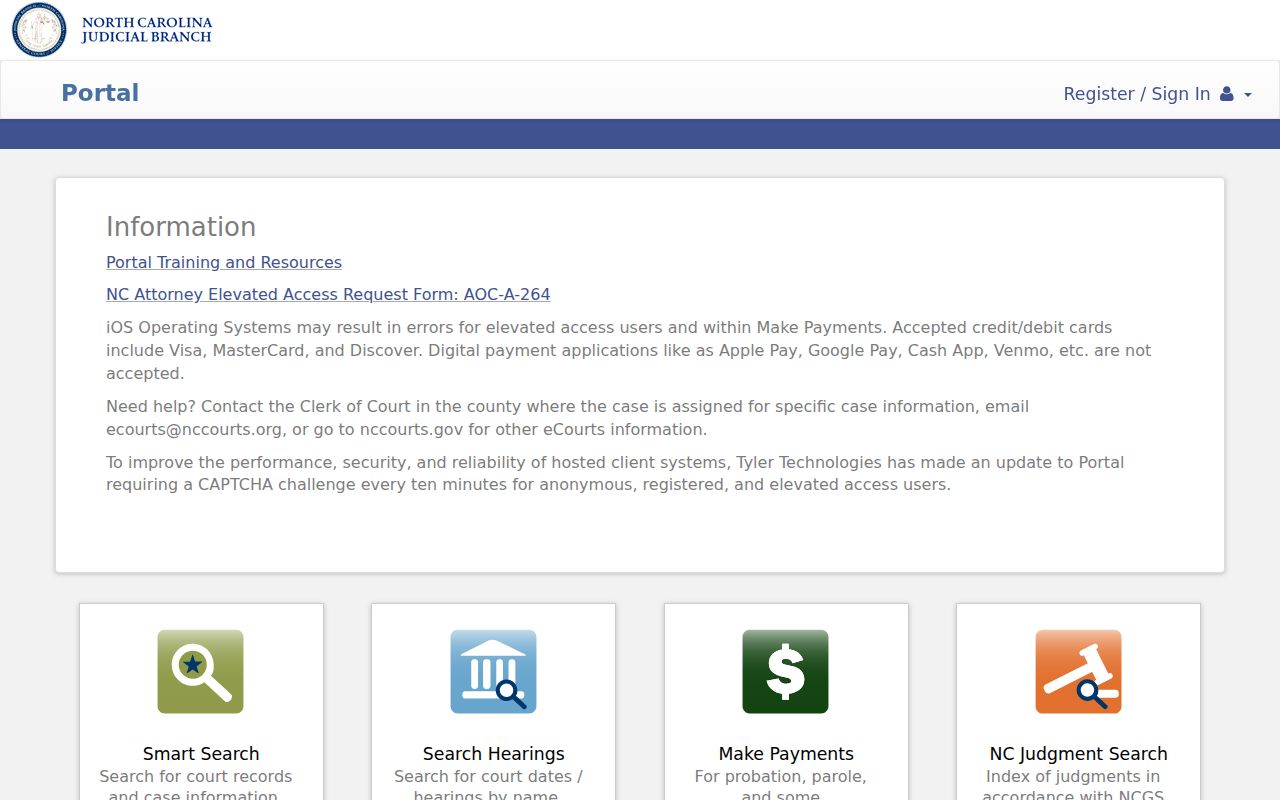
The screen is a discovery tool, not a certified statewide clearance. Sealed, juvenile, adoption, expunged, and other restricted matter will not appear as ordinary public results. Older paper pleadings may also remain at the filing-county clerk even though every county now uses eCourts.
| Search route | Useful input | Result to save | Fallback |
|---|---|---|---|
| Smart Search | Party, business, or case number | Case number, county, role, status | Filing-county clerk |
| Hearings | Party, case, attorney, officer, courtroom | Date and location | Clerk calendar or file |
| Judgments | Party or case number | Status and index date | Smart Search, then clerk |
| Federal cases | Party or federal case | Docket and district | Federal district clerk |
Note: A North Carolina Portal hit identifies a case trail; only the filing-county clerk can supply or certify the official state-court file.
Search North Carolina Court Records
A court name search works best when the type of dispute is known. District and Superior Court records cover criminal, civil, family, small-claims, estate, and special-proceeding matters under the unified state system. Estate files may name a decedent, personal representative, heirs or devisees, creditors, and property. A divorce judgment comes from the clerk in the county that granted it, while a Vital Records divorce certificate is a different document.
If a North Carolina case appears online, use its number to ask for the docket entry or filed document that matters. Courthouse terminals can search criminal cases by defendant, case number, victim, or witness, and can reach civil, estate, and special-proceeding data. The clerk counter is also the route for copies, certifications, missing attachments, and older local files. Appellate cases use their own court pages, while the three federal districts use PACER.
- Docket
- The dated list of filings, hearings, orders, and other events in a case.
- Disposition
- The recorded outcome or current resolution of a charge, claim, or judgment.
- Certified copy
- A custodian-issued copy bearing formal proof that it matches the office record.
- Expunction
- Statutory relief that removes a qualifying criminal record, not a mere hidden web result.
Trace North Carolina Property Owners
North Carolina has no statewide owner-name parcel search. Each county tax office keeps its own current roll, and county systems differ in search fields and historical depth. Wake County provides a useful model: its Real Estate Search accepts owner, property location, Real Estate ID, or Parcel Identification Number. A parcel card can show owner and mailing address, the property address, legal description, tax districts, values, sales, and deed citations.
The Wake County Real Estate Search demonstrates how a North Carolina owner search begins in one county.
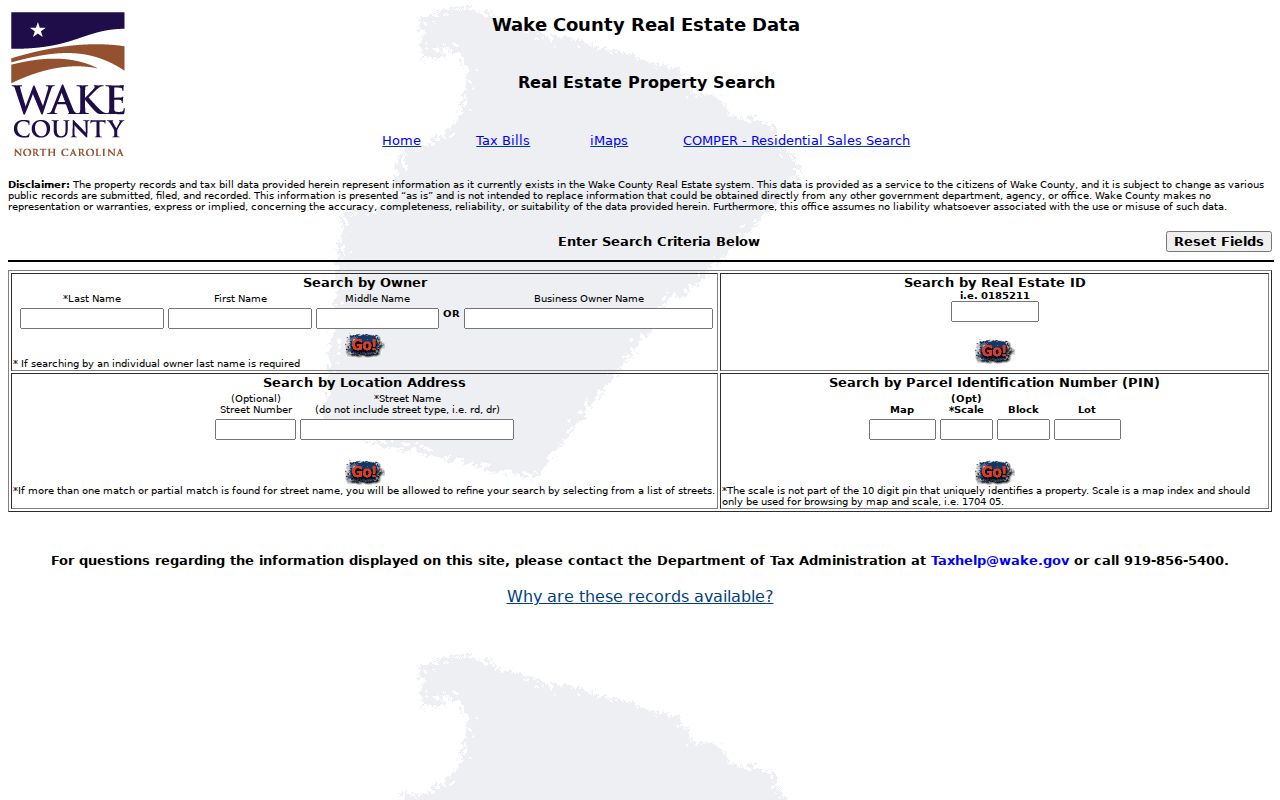
The owner's mailing address may be more useful than the property's situs address, which means the physical location. Still, a tax entry proves assessed ownership, not who lives there. Use the PIN and deed book/page to move from the parcel card to the recorded conveyance.
The official Raleigh and Wake County iMAPS viewer adds parcel outlines and local map layers to the North Carolina property trail.
GIS can turn an address or map click into a parcel identifier. The clean workflow is address to parcel polygon, tax card, PIN and deed citation, then the Register index. Map boundaries are informational, so use a deed or survey when the legal boundary matters.
Wake Deed Search Fields
Registers of Deeds index land instruments county by county. In Wake County's Consolidated Real Property Index, searchers can use party name, book and page, instrument number, recording dates, and instrument type. A grantor transfers an interest; a grantee receives it. Name variants matter because initials, middle names, firms, trusts, and estates may be indexed in different forms.
The Wake County recorded-document index is one official example of a North Carolina county deed search.
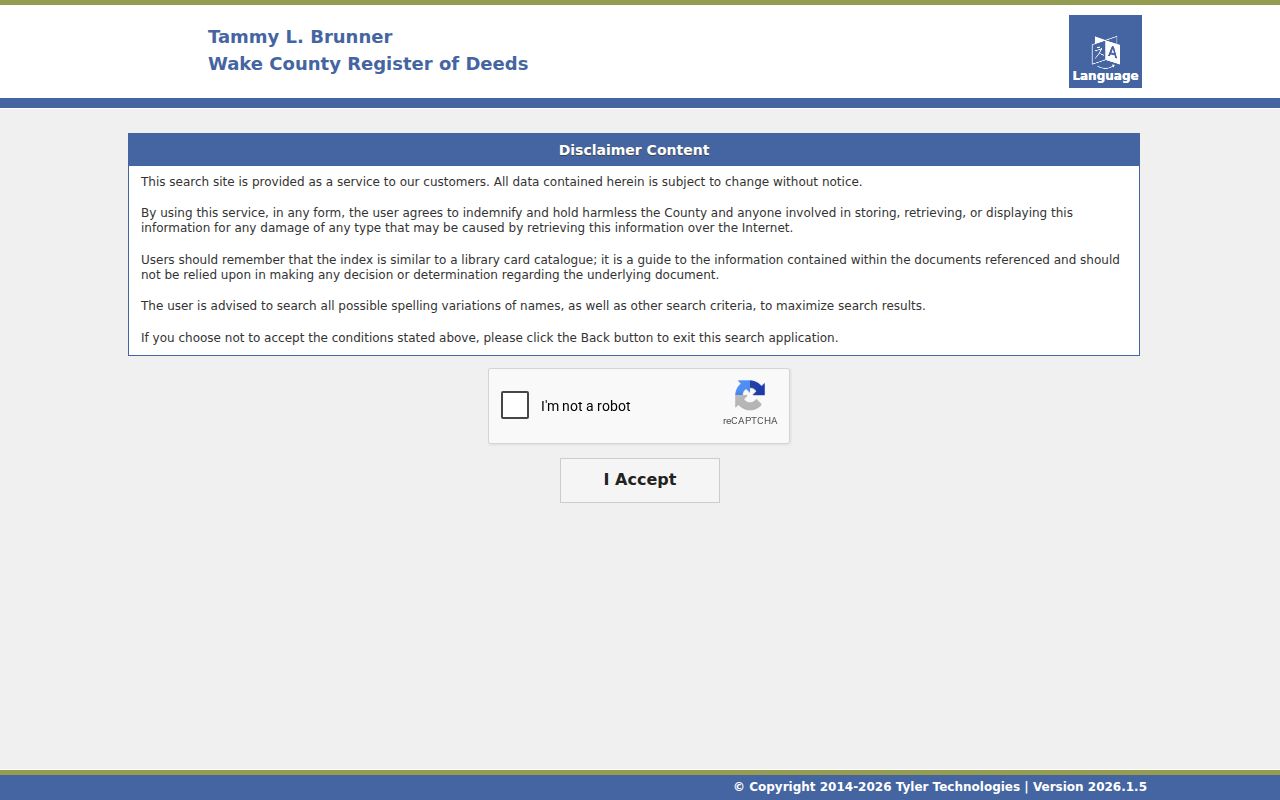
An index result can lead to an image showing party roles, recording date and time, book and page, legal description, parcel references, return-to address, preparer, notary, and signatures. Online images are research copies. Certified copies must come from the county Register.
| Wake CRPI field | Input | Required | Best use |
|---|---|---|---|
| Last or firm name | Text | Usually for name route | Grantor, grantee, trust, estate, or firm |
| First and middle name | Text | No | Narrow a common surname |
| Party type | Selector | No | Grantor, grantee, or both |
| Book and page | Numbers | For citation route | Retrieve a known instrument |
| Recorded dates | Date range | No | Limit a long name list |
| Instrument type | Dropdown | No | Narrow deeds, liens, plats, or other records |
Find North Carolina Vital Records
NC Vital Records registers statewide birth, death, fetal death, marriage, and divorce events. County Registers of Deeds issue local birth and death certificates and marriage records when the event was filed there. Statewide birth and death registration began in October 1913. For a divorce, the county clerk holds the judgment, while the state office issues a certificate or report.
North Carolina does not use one blanket rule that makes ordinary vital certificates unrestricted after a fixed number of years. Chapter 130A, Article 4, including G.S. 130A-93, controls certified and noncertified access, identity, and special categories. Adoption, delayed birth, legitimacy, and medical portions receive distinct treatment. Applicants should use the official form, show the qualifying relationship or reason when required, provide identification, and check current charges.
When no civil certificate exists, North Carolina researchers can use marriage bonds, cohabitation records, church registers, Bibles, cemetery files, newspapers, deeds, tax lists, court minutes, or estate papers. The State Archives copy route covers named historical series, but it needs a person, year, county, and record type.
Note: A North Carolina divorce certificate confirms the event, while the granting-county judgment contains the court record and comes from the clerk.
North Carolina Voter Search Snapshot
The NCSBE individual lookup uses last name as the core field, with optional first name, year of birth, county, and status. A matching North Carolina voter record may show registration status, county, precinct, districts, polling place, sample ballot when available, and election participation history. It never reveals ballot choices. Full birth date, Social Security number, driver-license number, submitted email, and other protected fields are excluded.
Voter records deserve focused treatment because public fields, downloadable files, address protection, and participation history each have separate limits. The full field-by-field workflow appears in the North Carolina voter records resource. For a simple people search, the county and precinct can help distinguish names, but changing status or district lines means each result needs a date.
North Carolina Offender Search Layers
Custody data is split among state prison and community corrections, county jails, the state sex-offender registry, and the federal Bureau of Prisons. One North Carolina search cannot stand in for the others. The Department of Adult Correction tool accepts an offender number or name with demographic and custody filters. County sheriff tools vary, and some counties require a phone call or records request instead of a searchable roster.
The official North Carolina Offender Public Information Search covers prison and Community Corrections data rather than every arrest or county booking.
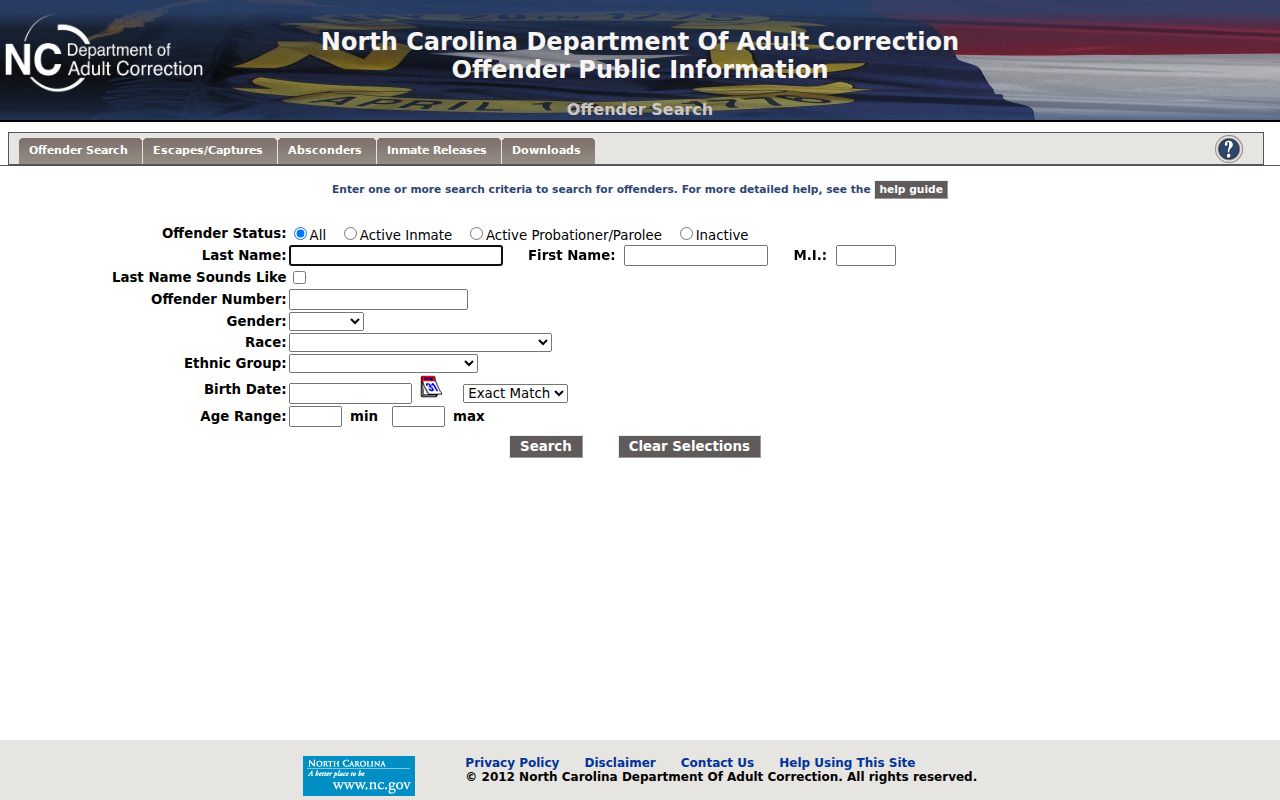
Results may include name or aliases, offender number, descriptors, sentence or conviction data, custody location, admission, release, and supervision information. Dates can change, and the agency warns that the web result is not the complete official record. Older or missing material requires a focused agency request.
The North Carolina SBI Sex Offender Registry offers a separate name, address, county, radius, map, and registration-number search.
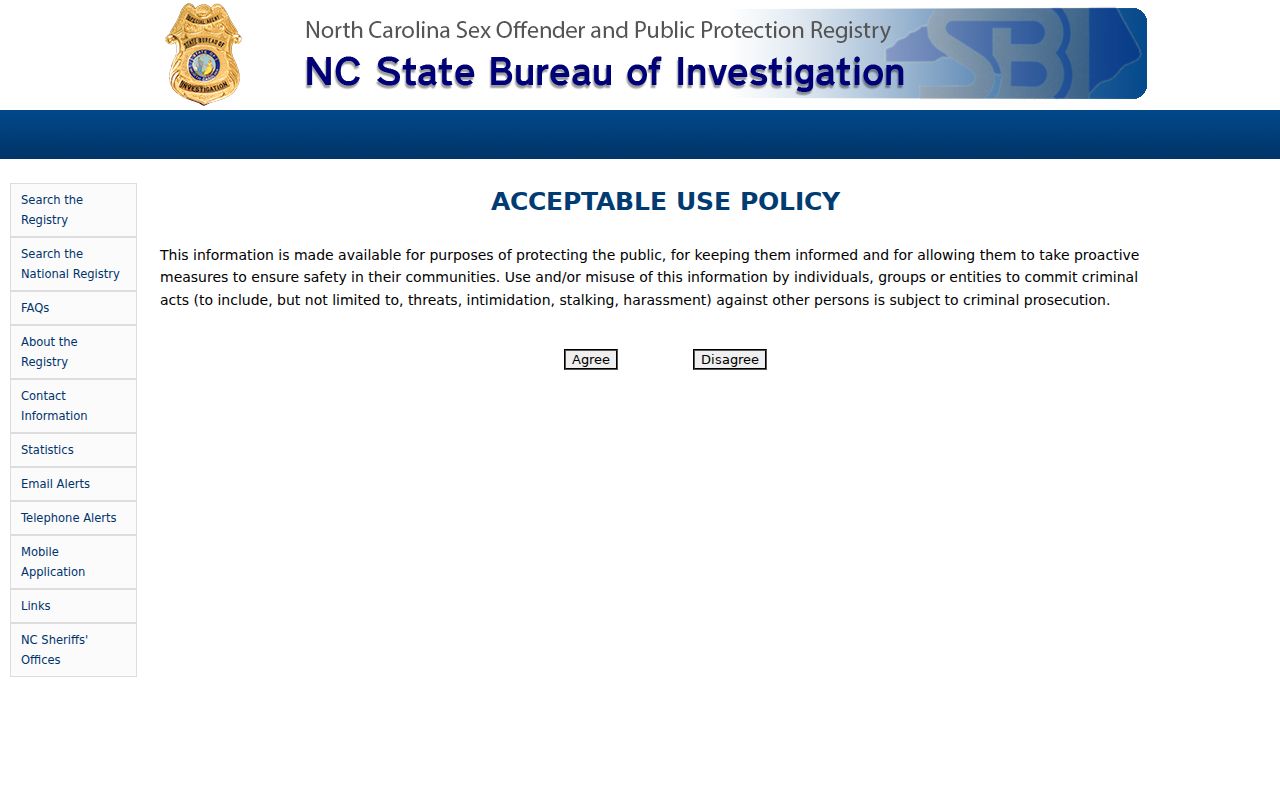
A registry result can show a photograph, aliases, physical description, registration status, offense, address, and verification information. It is not a complete criminal record. Suspected errors should go to the responsible sheriff.
Lawful use only. North Carolina public information does not authorize stalking, threats, intimidation, or repeated harassment. Verify records with the custodian and respect protected addresses.
Find Business Names in North Carolina
The Secretary of State business search can connect a legal entity name to its SOS ID, type, status, formation facts, registered agent, registered office, addresses, and available filings. A registered agent is not necessarily the owner. North Carolina assumed-name records form a second trail: modern certificates remain county-filed, while the Secretary of State provides a statewide search for filings made on or after December 1, 2017.
Professional identity checks remain board-specific. North Carolina has official tools for physicians, nurses, attorneys, general contractors, real-estate brokers, cosmetology licensees, and other regulated fields. Search by name or license number where available, then compare type, status, location, and any public discipline. A name match alone is weak proof. The board's own record is stronger than a commercial compilation.
Use the entity search for an organization, agent, office, status, and filings. Use the assumed-name database for a DBA and its county-filed certificate. Use the specific license board for type, number, standing, and public actions. Comparing the same name across those North Carolina sources can separate a business role from a professional credential.
Note: An agent, licensee, firm officer, and assumed-name filer may be different people, so preserve each role shown by the official record.
North Carolina Unclaimed Property Search
NCCash is the official North Carolina unclaimed-property name search. It can reveal that property was reported for an owner or co-owner and can help reconnect a person with an older address or financial relationship. The public result does not expose all claim details. A claimant must prove identity and the right to the property through the official claim process.
The North Carolina NCCash search is free to search and free to use for an official claim.
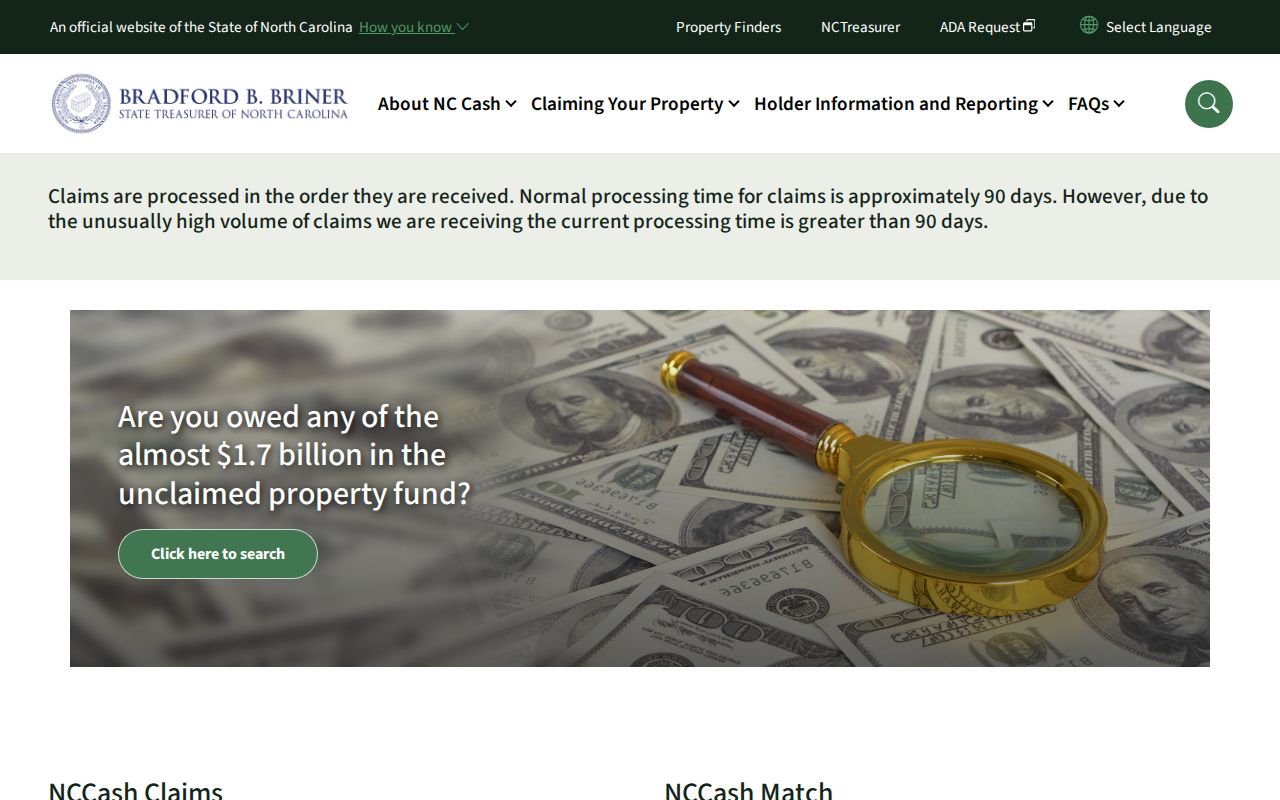
The screenshot shows why NCCash works as a narrow North Carolina people-finding trail, not a full address database. Search name variants, preserve the owner or claim reference shown, and use only the state's own claim route. An upfront recovery fee from an unsolicited contact is a warning sign.
Note: North Carolina does not charge an owner to search NCCash or file an official claim through the state program.
North Carolina Archives Reconnect Families
Estate files, obituaries, and deed chains can connect a deceased North Carolina owner to a personal representative or heirs. Begin with an estate case number or death notice. Then compare the estate petition, deed from an estate or heirs, property citation, and later notices. These records reflect facts at the time of filing, so a current address may require a newer county or statewide source.
The State Archives preserves transferred wills, estates, civil and criminal actions, court minutes, divorces, land, marriage, election, and other county material. Its catalog describes many series without placing every page online. Search the county record group, open child records or box lists, and request the cited item or visit the search room. The State Library genealogy resources and DigitalNC city directories add books, newspapers, maps, directories, and family-history routes.
North Carolina family trails can predate modern certificates. Marriage bonds from 1741 to 1868 reflected intent to marry; 1866 to 1867 cohabitation records documented marriages of formerly enslaved people; standardized licenses began in 1868. Each is a different source. Treating them as one modern marriage index would erase the context that makes the record useful.
North Carolina Search Geography Matters
Postal city, municipal limits, county, school district, and court filing county are separate layers. A Raleigh mailing address may sit outside city custody for the record being sought. Wake County keeps deeds, county tax data, probate files, and state trial cases tied to Raleigh. City offices keep city permits, boards, planning matters, inspections, code cases, and city correspondence.
County boundaries also change over time. A North Carolina resident can appear in a parent county's early deeds, marriages, taxes, estate papers, and court minutes, then in a later county without moving. Establish which county existed on the event date. The State Archives County Records Guide and county box lists show surviving series, originals, and microfilm when the modern county portal has no answer.
Region can guide, but not prove, a trail. Coastal Plain records may emphasize early land and maritime communities. Piedmont searches often gain context from textile, tobacco, furniture, university, and business sources. Mountain searches may cross later county lines or nearby state boundaries. Use the regional setting to choose newspapers and archives, then return to a dated North Carolina record for proof.
Note: A postal place name is a mail route, not proof that a city, county office, court, or school system holds the record.
Protect North Carolina Search Results
North Carolina privacy rules are record-specific. Chapter 132 requires protected identifying information to be removed while the public remainder is produced. Voter law closes full birth dates, Social Security numbers, driver-license numbers, election-registration agency identity, submitted email, and ID images. DMV personal information follows separate state and federal restrictions. Sealed court matters, adoption files, juvenile records, and selected vital material also have their own limits.
The North Carolina Address Confidentiality Program lets qualifying survivors use a substitute address in specified state and local dealings. Public voter data may therefore show a name and precinct without exposing a residence. Do not try to defeat that protection by combining other records. A missing address can reflect a lawful safety measure, not a bad search.
Official records and private compilations also serve different roles. An official index names its custodian and supplies a stable citation, though it may omit a scan or protected field. A private compilation may combine old sources and produce fast contact leads, but it can merge people or keep stale data. Confirm identity with two facts and return to the North Carolina custodian before relying on a result.
| Search source | Strength | Limit |
|---|---|---|
| Official North Carolina index | Named custodian and stable record citation | May omit images, old files, or protected fields |
| County counter or archive | Underlying file, older series, and copy service | May require a visit, request, or fee |
| Private compilation | Fast cross-source contact leads | Can be stale or merge people with similar names |